Lancaster County punches well above its weight when it comes to live music. We are heirs to a musical history that connects 18th-century mystics to stadium tours, NASA mission control to Catholic school theatre class. We’re retelling five moments in Lancaster’s musical history that have shaped our town.
1. America’s first female composers
In the 1740s, in a cluster of medieval-looking buildings along the Cocalico Creek, a group of celibate German mystics was doing something radical: letting women compose music.
Known for wooden-bench beds, one meal a day, and the belief that God was divided into two genders, the Ephrata Cloister was strange even by colonial standards. They also wrote over a thousand original hymns, intricate compositions meant for candlelit midnight worship.
For centuries, the music was attributed to the cloister’s founder, Conrad Beissel. Then, while musicologist Chris Herbert was studying and digitizing the Ephrata Codex (an 18th-century music manuscript in the Library of Congress), he noticed something no one had seen before: names in small script beside the compositions. Three belonged to women. Sister Föben. Sister Ketura. Sister Hanna.
They’re now recognized as the first credited female composers in North America. Their music has since been recorded in the original meetinghouse. Listen to the NPR story here.
2. The Lancaster field where America’s biggest pop stars rehearse
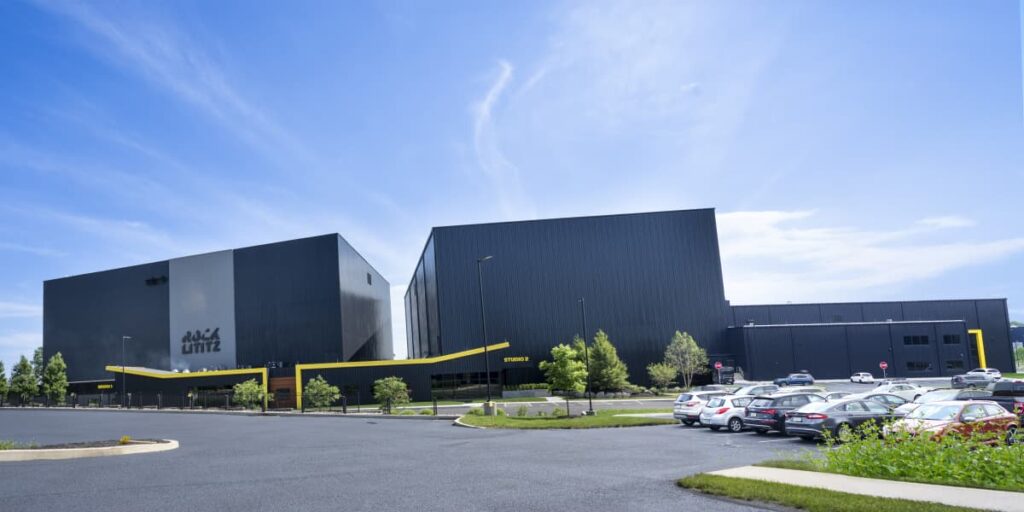
Drive west on Route 501, past the strip malls, and you’ll hit farmland that looks like every other stretch in Lancaster County, except for the 108-acre production campus hidden behind the trees.
Rock Lititz is where the world’s biggest tours come together before hitting the road. Taylor Swift, Beyoncé, Lady Gaga, BTS, Usher, Ariana Grande. The studios are among the tallest and strongest in the world, capable of holding full-scale arena rigs.
It started when Roy Clair bought a PA system in 1955 so his sons could run school dances. Those sons turned it into Clair Global, one of the largest live-sound companies in the world.
3. The back room that launched a thousand bands
In 1985, a 23-year-old named Rich Ruoff talked his way into running a vacant room behind Tom Paine’s restaurant downtown. He called it the Chameleon Club. Capacity: about 100.
Within three years, bands were lining up. The club moved to a bigger space on Water Street, and something unexpected happened: Lancaster became a music destination. Wedged between New York, Philly, and Baltimore, the Chameleon caught touring acts on their way to another, bigger show. In March 1990, Soundgarden played there with Faith No More opening (tickets were $10). The Pixies came through that December. So did the Ramones, Fugazi, Modest Mouse, Joan Jett, Phish.
But on the stage of the Chameleon, a local music scene was starting to grow.
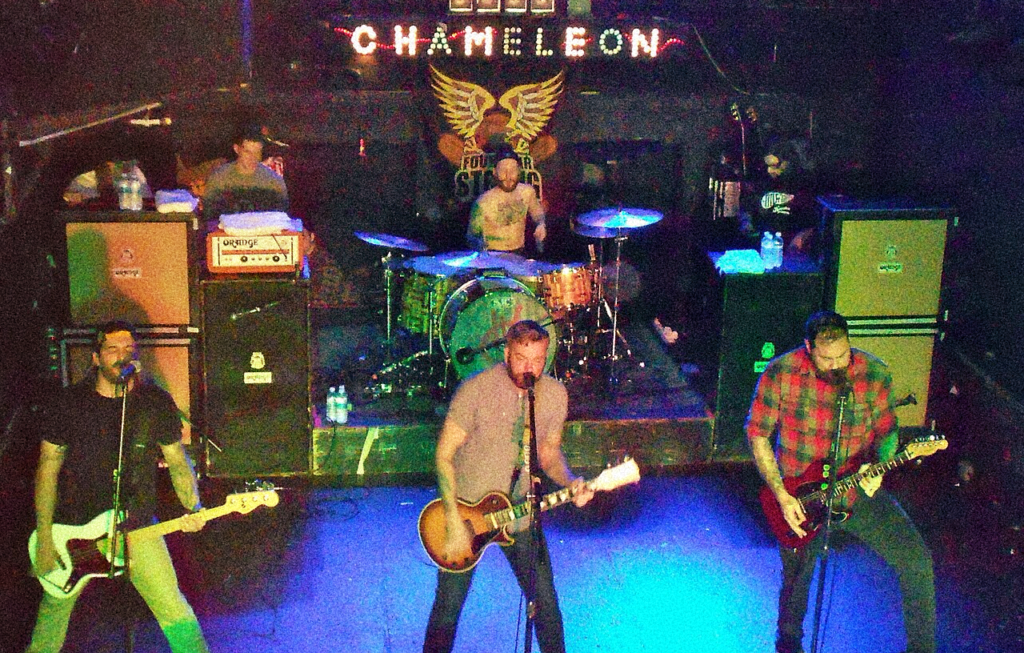
Local bands like The Ocean Blue, The Innocence Mission, and Live played early shows on that stage before MTV and Billboard came calling. By the time it closed in 2020, over 4,000 bands had passed through.
The building is now an art school. But the man who started it all is opening a new venue (more on that later).
4. The song that woke up astronauts
Karen and Don Peris met during a production of Godspell. They got married. They started a band. They called it The Innocence Mission.
For more than three decades, they’ve made music described as quiet, delicate, and luminous.
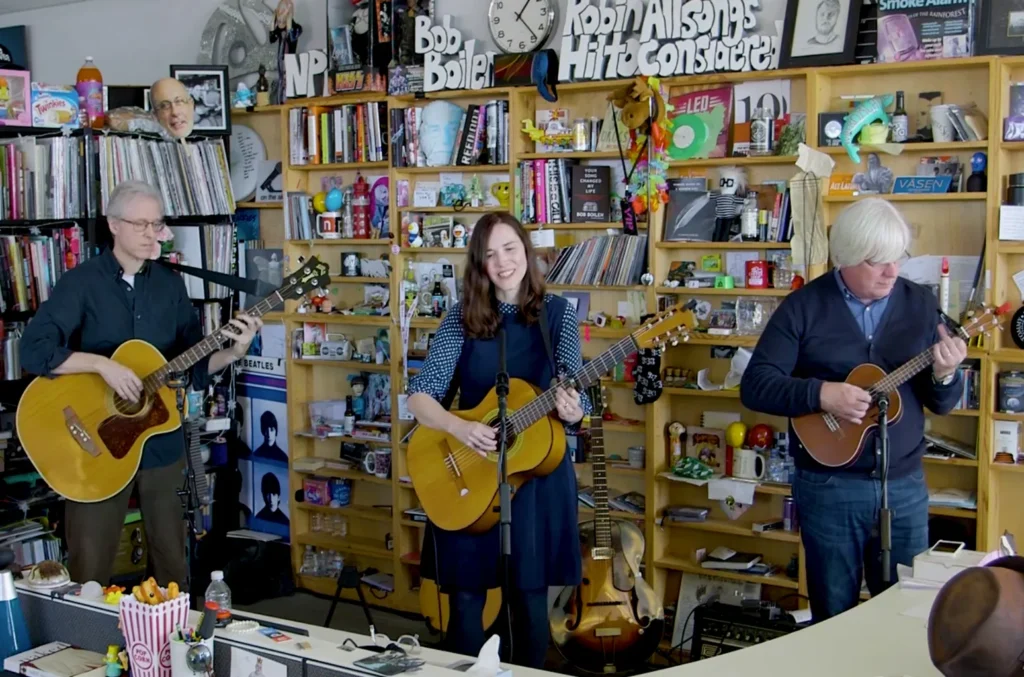
Their music has been covered by some of America’s most well-known artists; it’s a favorite of curators on MTV and NPR; and it appears in more than a dozen TV and film soundtracks. Yet, they’ve never chased fame. They teach music lessons to local kids. They recorded one album in an old candy factory. They continually turn down opportunities to play bigger shows.
On June 6, 2008, NASA used their song “Bright as Yellow” as the wake-up call for the crew of Space Shuttle mission STS-124. Somewhere in orbit, astronauts woke to music made by a married couple from Lancaster who met in a high school musical.
Their latest album, Midwinter Swimmers, earned an 8.0 from Pitchfork. The review called it the kind of record the word “beautiful” was invented to describe. Read the Pitchfork article about their latest release.
5. The night The Boss showed up unannounced
The Village opened in the 1950s, the kind of club where you could see Arlo Guthrie one week and Quiet Riot the next. It survived disco, punk, and the long decline of live music venues everywhere.
In 1984, Bruce Springsteen walked in and played a surprise set. Nobody knows exactly why. The details have faded, but the story hasn’t.
The Village closed in 2022. Then Rich Ruoff, the same Rich Ruoff who founded the Chameleon, announced he was bringing it back. The door is open again. You never know who might walk through. Read about the surprise visit at LNP.
6. We have a front row seat to the next act
The Village is back. In Millersville, Gregg Barley’s Phantom Power has become one of the best small venues in the region. Rock Lititz is still fully booked and still sending stadium tours into the world from a hidden-away facility on Route 501. Lancaster has always had the infrastructure and the quiet confidence to punch above its weight.
We want to make sure we don’t miss a thing. We’re launching a live music calendar for Lancaster County, a running list of every show, every venue, every act passing through. If there’s a band playing somewhere in the county, we want to help you find it. Because you never know who might walk through the door. Click here to check out The Lancaster Review’s live music calendar.
