On Sunday, Lancaster’s air quality hit “Unhealthy” levels on January 18th, with the Air Quality Index climbing to 156, well into the red zone where everyone, not just sensitive groups, should take precautions.
It was a stark reminder that Lancaster County has a serious air quality problem, one that gets worse in winter and that most residents don’t think about until days like Sunday raise awareness.
The Uncomfortable Truth About Lancaster’s Air
Many people are surprised to find out that Lancaster County, known for farmland and open spaces, has some of the worst air quality in the country.
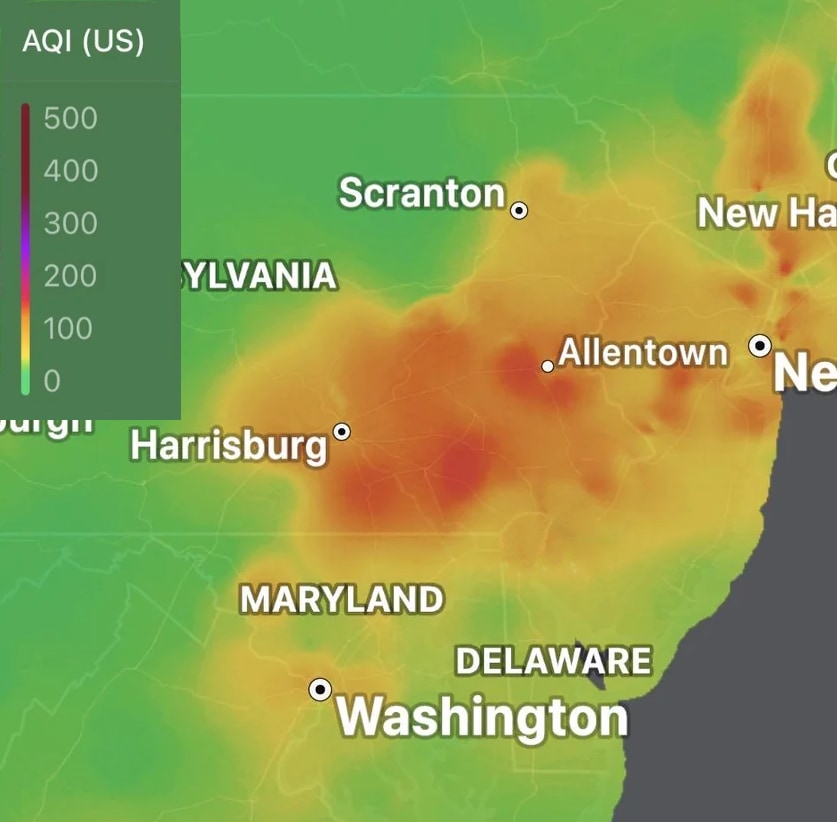
The American Lung Association’s most recent “State of the Air” report ranked the Lancaster metro area second worst in the entire Mid-Atlantic region for daily particle pollution. The county earned an F grade for the fourth consecutive year.
“People move to Lancaster thinking this is great air because it’s all country and a lot of farms,” Dr. Timothy Craig, a specialist in allergy, asthma, and immunology at Penn State Health Milton S. Hershey Medical Center, told LNP in 2022. “But don’t be fooled by the county’s idyllic rural landscape.”
Why Lancaster? A Perfect Storm of Factors
Lancaster’s air quality problems stem from a combination of geography, industry, and everyday life:
We’re flat and downwind. Lancaster County sits east of the Appalachians, which normally push wind eastward. Pollution from power plants and manufacturing facilities in York County, the Ohio River Valley’s coal plants, and even the Baltimore and D.C. metro areas drifts into our airspace. With only about 13.5 percent tree cover (one of the lowest rates in Pennsylvania), there are fewer natural filters to clean the air.
A downside to farming. Spreading manure and fertilizer releases ammonia gas that becomes particulate pollution. Lancaster County is the state’s largest source of ammonia emissions. Other agricultural practices, like plowing and field burning, add to the particulate matter in the atmosphere.
Wood stoves contribute. The large concentration of Plain sect farms means more wood-burning stoves, which are the second-largest local source of particulate pollution after agriculture.
Why Air Quality Is Worse in Winter
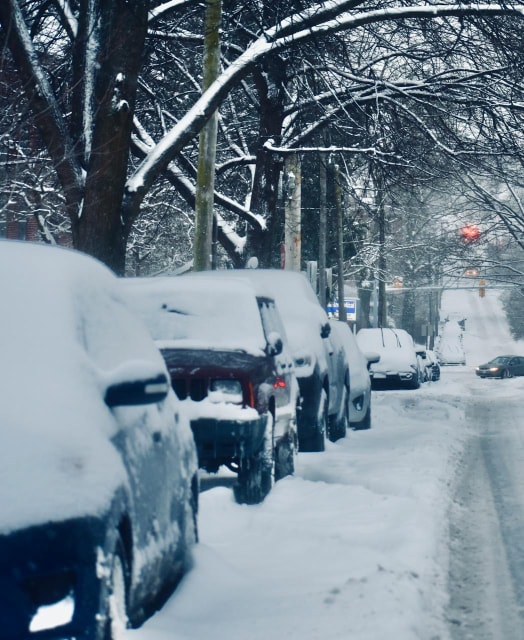
Sunday’s poor air quality wasn’t random. Winter creates ideal conditions for pollution to build, thanks to a phenomenon called thermal inversion.
Normally, warm air near the ground rises, carrying pollutants up and away. But in winter, especially after snowstorms, the normal pattern flips. Cold, dense air gets trapped at the surface under a layer of warmer air above. That warm air acts like a lid, preventing pollutants from dispersing.
Snow-covered ground makes this worse by reflecting heat rather than absorbing it, which prevents the normal mixing of air layers. Clear skies, calm winds, and long winter nights also contribute. The pollution continues to accumulate until a strong storm system or a low-pressure front moves through to break up the inversion.
Meanwhile, winter habits pile on more pollution: we burn wood to stay warm, idle our cars to defrost them, and run furnaces constantly. Cold temperatures also make car engines burn fuel less efficiently, creating more carbon monoxide.
The result? Days like Sunday, when particulate matter, microscopic bits of ash, dust, metals, and chemicals, build up to unhealthy levels.
Why This Matters for Your Health
Fine particle pollution, also called PM2.5, is small enough to get deep into your lungs and cross into your bloodstream. Short-term exposure can trigger asthma attacks, aggravate heart conditions, and increase the risk of heart attacks and strokes. Long-term exposure has been linked to lung cancer, respiratory disease, and even cognitive decline.
Children, older adults, pregnant people, and anyone with asthma, COPD, or heart disease are most at risk.
How to Protect Yourself and Your Family
Check the air quality before heading out. The EPA’s AirNow website (airnow.gov) provides real-time AQI readings and forecasts for Lancaster. These are also easily accessible in the iPhone’s weather app.
On unhealthy air days:
- Reduce time spent outdoors, especially during extended or strenuous activity
- If you exercise outside, choose less intense activities, shorten your workout, or reschedule
- Stay away from busy roads, where pollution concentrates
Keep your indoor air clean:
- Avoid using wood stoves, fireplaces, and candles on bad air days
- Don’t smoke indoors
- Use HEPA air filters in your HVAC system or consider a portable air cleaner
- On days when outdoor air quality is poor, keep windows closed
Know the warning signs. Difficulty breathing, coughing, throat irritation, or chest tightness are all signals to get inside and reduce activity. People with asthma should have their rescue inhalers handy.
We Are Moving in the Right Direction
Lancaster’s air quality challenges are real, but they’re not unchangeable. The Brunner Island power plant, once one of the region’s biggest polluters, has dramatically reduced emissions after converting from coal to natural gas. And locally, more farmers are adopting new practices that keep dust and ammonia out of the air. In the meantime, the best thing you can do is stay informed. Pay attention to air quality on winter days, and take simple precautions when the AQI spikes.
