The Fight Over Data Centers in Lancaster
Most borough council meetings draw only a handful of residents and involve the council members working through the mundane details that keep our small towns running.
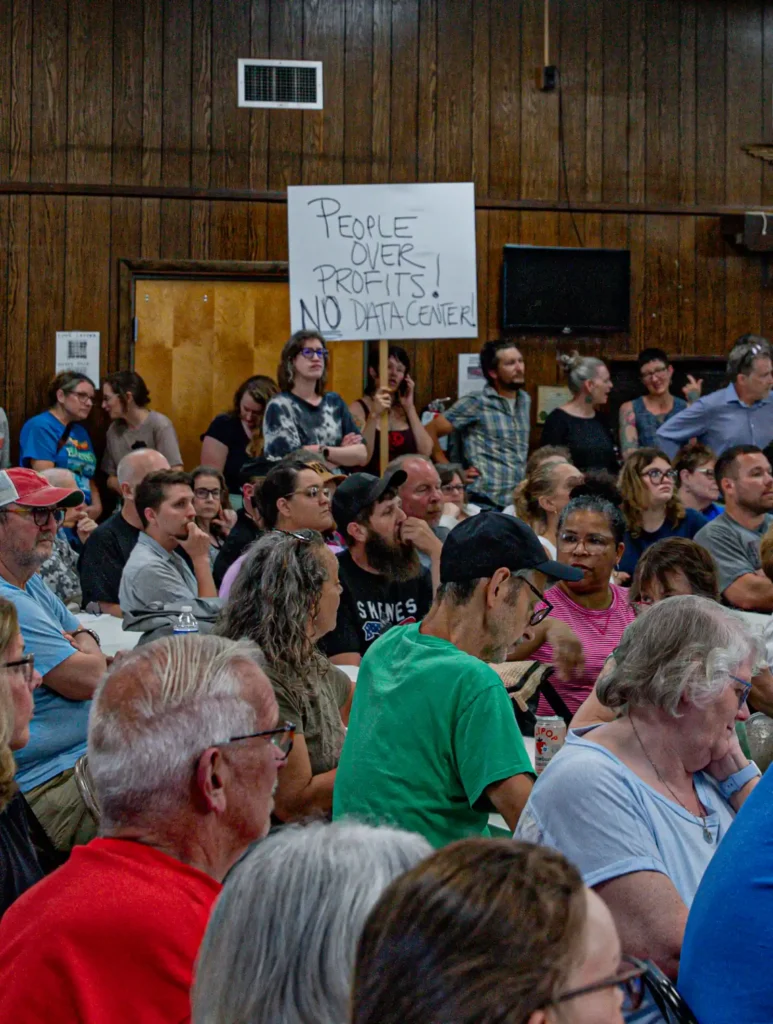
But in Columbia, this week was different. On Tuesday night, between 500 and 600 people descended on the town fire hall to protest one item on the agenda. At the heart of the debate was a $6.35 million bid by a New York developer to acquire a parcel of land owned by the borough.
In any other circumstance, the bid would have been great news for the cash-strapped borough. But the developer who made the offer was expected to build a hyperscale data center in Columbia.
After more than three hours of public comment on the topic, the council, in a unanimous vote, rejected the bid.
A New Challenge for Small Towns in Lancaster
More than 40 local residents, most of them young adults, made appeals that included everything from academic research to beat poetry. While they lacked the civility and decorum that council members would have preferred, the love for their town was unmistakable.
And all but a few of the speakers saw a data center as a serious threat to their community.
What happened in Columbia, is likely to play out in townships and boroughs throughout Lancaster County. Large national firms see the county as an ideal place to profit from the explosive growth of AI by building data centers. Local leaders see these facilities as a way to fill budget gaps. It will be up to the citizens of Lancaster to decide if the benefits of data centers outweigh the costs.
You should make your voice heard for any decision in your town.
Tyler Waites - Columbia Resident
What Is a Data Center?
While the term might sound technical, data centers are simply buildings filled with computers. The computers, in this context called servers, are used to store and process data. The website you’re reading this on is stored on a computer in a data center. When you run an AI prompt, it is processed on a computer in a data center.
Data centers aren’t new; they date back to the beginning of the internet era. But the explosive growth of AI has led to a massive increase in demand for computing power and storage. In response, developers are trying to cash in on the trend by building data centers wherever they can.
There are three main categories of data centers:
- Enterprise Centers: Privately owned facilities that support a single organization’s operations.
- Colocation Centers: Purpose-built facilities where multiple tenants rent physical space, but manage their own computing systems.
- Hyperscale Centers: Massive campuses that house thousands of servers and are built by or for the world’s largest technology companies.
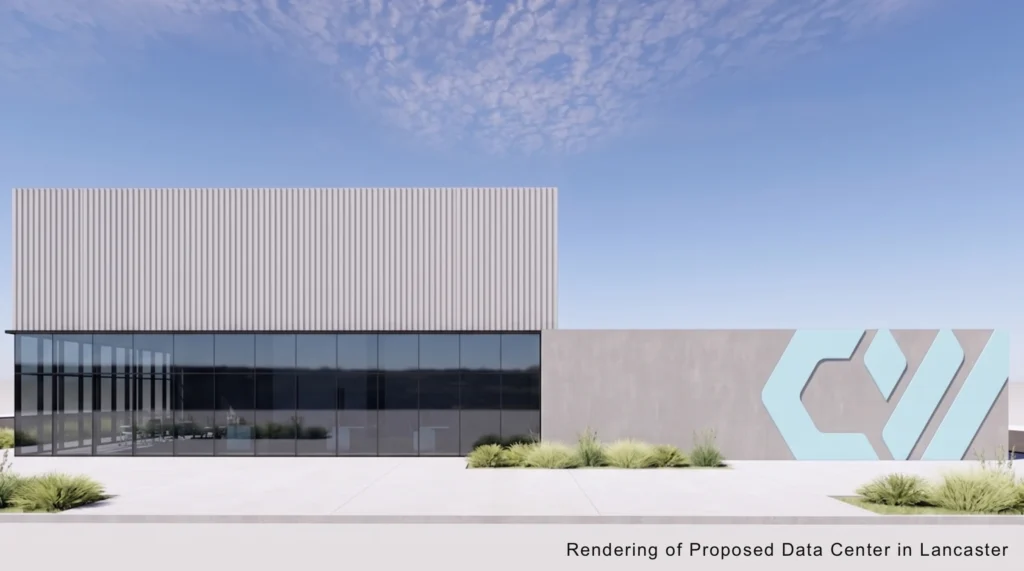
Within the hyperscale group, there’s now a sub-category: AI hyperscalers. These new data centers are built to house computer clusters that train and run large language models like ChatGPT and Claude. That is the type of data center coming to Lancaster.
The CoreWeave project on Greenfield Road is already underway and is the clearest example of what an AI hyperscaler in Lancaster will look like. CoreWeave (originally a cryptocurrency mining operation) is now transforming two former printing facilities that span 1.5 million square feet and 144 acres into AI data centers (LNP). Lancaster’s pre-existing data centers, by contrast, are mostly traditional colocation facilities. The differences in scale, power draw, and impact are significant.
The CoreWeave campus will launch with 100 megawatts of capacity and has the potential to expand to 300 megawatts. To put that into perspective, “one megawatt is likely enough to power 400 to 900 homes for a year” (LNP). The International Energy Agency estimates a typical AI data center uses as much electricity as 100,000 homes, and some of the largest planned facilities would draw more power than the city of Pittsburgh (IEA).
Why Residents Are Concerned
Electric Rates. According to the Lancaster County Planning Commission, “70% of the increase in electricity costs from last year was fueled by the energy demands of data centers.” The increased rates are not expected to improve. The commission’s report goes on to state, “As of September 2025, PPL, the electricity supplier for all of Lancaster County, reported 14.4 gigawatts of projected data center load for projects in advanced planning stages. Proposed projects will quickly add to the current peak of 7.5 gigawatts, a figure that took more than a century to reach” (LCPC).
68%
of Pennsylvania voters oppose an AI data center in their community according to a recent Quinnipiac poll.
Water Usage. Hyperscale data centers generate an intense amount of heat, and keeping them cool can require 3 million gallons of water per day (LCPC). The CoreWeave Lancaster site has committed to cap each campus at 20,000 gallons per day (a low ceiling for the industry). But air-cooling and closed-loop systems can come at the cost of even higher electricity use and additional pollution from chemical coolants.
Local Temperature Increases. As a part of the cooling process, the heat from data centers is transferred to local climates. A recent study reviewing NASA temperature data from 8,000 data centers found that local temperatures around data centers rise by 3° to 16° Fahrenheit, and the effects were observable up to 6 miles away. (The Weather Channel).
Health Concerns From Light, Noise, and Air Pollution. A peer-reviewed article published on the National Institute for Health website cites observable increases in a range of health issues. They conclude that “the global data center boom is emerging as a public health concern” (NIH).
False Promises. To offset these concerns, data center promoters and local leaders claim that communities will see increases in jobs and tax revenue. But multiple studies show that the promised job growth almost always falls short. A recent Brookings Institution study concluded that “In short, the standard model of data center development has produced mostly short-term construction jobs in recent years and relatively little long-term, high-value tech activity or large-scale employment” (Brookings Institution).
It is just the beginning, because our administration is actively engaged with Amazon on additional sites in our commonwealth
Governor Josh Shapiro on the future of data centers in PA
What Happens Next is Up to You
While most residents oppose data centers, political leaders in both parties routinely support them. State and local officials are facing the same challenges that we are. Costs are rising rapidly, and there isn’t enough revenue to offset expenses. So it makes sense that when a large national company offers to bring tax revenue and jobs to a local community, the community jumps at the opportunity.
But a growing body of research shows that the promises are not being fulfilled, and the economic and environmental damage outweighs the advantages data centers provide.
The events in Columbia this week show that when residents are willing to stand up for what they believe, they have a chance to protect their community.